

What is a Vector Store? A Practical Guide for AI

AI-Vector-Store

Artificial Intelligence has moved quickly from rule-based systems to models that can understand language, images, and intent. At the centre of this shift is a simple but powerful idea: representing information as vectors. A “Vector Store” is the system that makes those representations usable at scale.

This post explains what a vector store is, how it works, and why it has become a critical component in modern AI architectures.

The Core Idea

A vector store is a database designed to store, index, and retrieve vectors.

A vector is a list of numbers that represents meaning. In AI, these vectors are generated by embedding models. These models convert unstructured data such as text, images, or audio into numerical form so machines can compare and reason about them.

For example, the sentences:

  • “Customer cannot log in”
  • “User unable to access account”

may look different as text, but when converted into vectors, they sit close together in a multi-dimensional space because they mean similar things.

A vector store allows you to:

  • Store these embeddings
  • Search them efficiently
  • Retrieve the most relevant results based on similarity

This is fundamentally different from traditional keyword search.

Why Traditional Databases Fall Short

Relational databases and standard search engines are excellent for structured data and exact matching. However, they struggle with meaning.

If you search a traditional database for “login issue”, it may miss records labelled “authentication failure” or “access denied”. It relies on exact words or predefined rules.

Vector stores solve this by focusing on semantic similarity rather than literal matches. They allow AI systems to “understand” relationships between data points.

How a Vector Store Works

At a high level, a vector store operates in three stages:

1. Embedding

Raw data is converted into vectors using an embedding model.

Examples:

  • Text is turned into sentence embeddings
  • Images into feature vectors
  • Logs into behavioural patterns

Each piece of data becomes a point in a high-dimensional space.

2. Storage and Indexing

These vectors are stored alongside metadata.

Because vectors can have hundreds or thousands of dimensions, specialised indexing techniques are used. Common approaches include:

  • Approximate Nearest Neighbour (ANN)
  • Hierarchical Navigable Small Worlds (HNSW)
  • Product Quantization

These methods allow fast similarity searches across large datasets.

3. Query and Retrieval

When a user submits a query, it is also converted into a vector.

The vector store then finds the closest vectors in the dataset. “Closest” means most similar in meaning, not identical in wording.

The result is a ranked list of relevant items.

A Simple Example

Imagine a support system storing past incidents.

Each incident description is embedded and stored as a vector.

A user asks:
“Why can’t I access my account?”

The system converts this question into a vector and searches for similar vectors. It may retrieve incidents tagged:

  • “Login failure due to expired password”
  • “User authentication blocked after multiple attempts”

Even though the wording differs, the meaning aligns.

Key Use Cases in AI

Vector stores are now a foundational component in many AI applications.

1. Retrieval-Augmented Generation (RAG)

Large Language Models such as OpenAI GPT models or Claude are powerful but limited by their training data.

RAG solves this by combining LLMs with a vector store.

Process:

  • Store enterprise knowledge as embeddings
  • Retrieve relevant content at query time
  • Inject it into the model prompt

This allows AI to answer questions using current, organisation-specific data.

2. Semantic Search

Instead of keyword search, users can ask natural language questions.

Example:
“Show me recent payment failures in production”

The system retrieves relevant logs, incidents, or tickets even if exact terms do not match.

3. Recommendation Systems

Vector similarity can identify related items.

Examples:

  • Products similar to what a user viewed
  • Documents related to a current task
  • Test environments with similar configurations

4. Anomaly Detection

By comparing vectors over time, systems can identify unusual patterns.

This is useful for:

  • Fraud detection
  • System monitoring
  • Data drift analysis

Where Vector Stores Fit in an AI Architecture

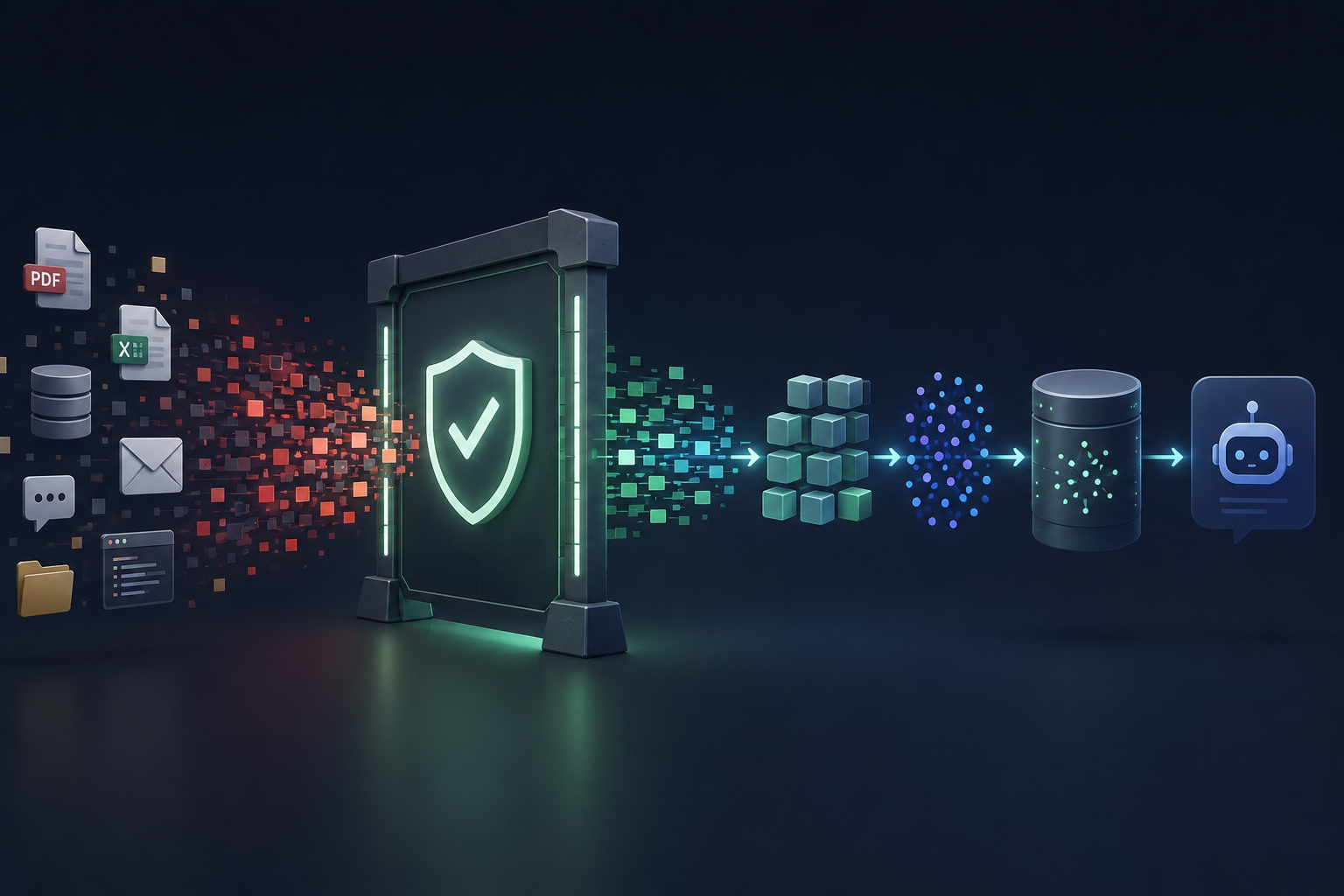
A typical modern AI stack looks like this:

  • Data sources: databases, logs, documents
  • Embedding model: converts data into vectors
  • Vector store: stores and retrieves embeddings
  • Application layer: APIs, workflows, orchestration
  • LLM: generates responses or actions

The vector store sits between raw data and AI reasoning.

It acts as the memory layer for AI systems.

Popular Vector Store Technologies

Several technologies have emerged to support this pattern:

  • Pinecone
  • Weaviate
  • Milvus
  • FAISS

Traditional databases such as PostgreSQL are also evolving with vector extensions.

Each offers different trade-offs in scalability, latency, and operational complexity.

Benefits of Using a Vector Store

Improved Relevance

Results are based on meaning, not keywords.

Flexibility

Works across text, images, and other unstructured data.

Scalability

Designed to handle millions or billions of vectors.

AI Enablement

Unlocks advanced capabilities such as RAG and intelligent search.

Considerations and Challenges

While powerful, vector stores introduce new design considerations.

Embedding Quality

The effectiveness of a vector store depends on the embedding model. Poor embeddings lead to poor results.

Data Freshness

Vectors must be updated when underlying data changes.

Cost and Performance

High-dimensional indexing can be resource intensive.

Governance

Sensitive data embedded into vectors must still comply with security and privacy policies.

This is particularly important when dealing with PII or regulated datasets.

A Practical Perspective

From an enterprise standpoint, a vector store should not be treated as a standalone tool. It is part of a broader architecture.

The real value comes when it is integrated into workflows.

For example:

  • Linking vector search to release management insights
  • Enabling environment-level knowledge retrieval
  • Supporting intelligent automation decisions

This aligns with the concept of a central control layer where data, environments, and processes are connected.

The Bottom Line

A vector store is not just another database. It is a new way of organising and retrieving information based on meaning.

As AI systems become more context-aware, the need for fast, accurate semantic retrieval will only increase.

Vector stores provide the foundation for this capability.

They turn raw data into something AI can reason over, making them essential for any organisation looking to move beyond basic automation and into intelligent systems.

In simple terms:

If large language models are the brain, the vector store is the memory that makes them useful in the real world.

What Is Ephemeral Data? A Practical Guide for Modern IT Teams

In contemporary IT environments, development speed, security, and operational efficiency are under constant pressure. One concept gaining significant traction in response to these pressures is ephemeral data, a modern approach to delivering fast, compliant, and disposable data for development, testing, and analytics.

This post explains what ephemeral data is, why it matters, and how leading organisations are using it to improve agility while reducing cost and risk.

Defining Ephemeral Data

Ephemeral data refers to data that is short-lived, on-demand, and discarded once its immediate purpose is served. Unlike traditional datasets that are stored, shared, and retained across environments, ephemeral data exists only for the duration of a task, test cycle, or session.

In practice, ephemeral data is:

  • Temporary — created just-in-time and removed when no longer needed.
  • Non-persistent — not stored long-term or reused across cycles.
  • Automated — provisioned programmatically through pipelines or tooling.
  • Isolated — delivered to a specific environment without shared dependency.
  • Secure and compliant — typically masked or virtualized to reduce exposure.

This model aligns directly with modern DevOps, CI/CD, and cloud-native development patterns.

Why Ephemeral Data Matters

Organisations are moving toward ephemeral environments and ephemeral data for several compelling reasons:

1. Faster Development & Testing

Ephemeral data supports rapid iteration by providing developers and testers with instant, production-like datasets without waiting days for database refreshes. When environments can be provisioned and destroyed automatically, delivery cycles accelerate dramatically.

2. Reduced Storage & Infrastructure Costs

Traditional test databases are often multi-terabyte, persistent, and duplicated across multiple environments. Ephemeral data eliminates these heavy copies, lowering storage consumption and associated infrastructure overhead.

3. Improved Security & Compliance

Short-lived datasets reduce the exposure window for sensitive information. When paired with masking or synthetic data generation, ephemeral data helps organisations maintain compliance with regulations such as GDPR, HIPAA, or PCI-DSS.

4. Elimination of Environment Drift

Long-running non-production environments tend to accumulate configuration drift, creating inconsistent testing outcomes. Ephemeral environments are provisioned cleanly every time, ensuring repeatability and reliability.

5. Scalable Parallel Testing

Because ephemeral data is lightweight and fast to provision, teams can run multiple test cycles or pipelines concurrently — a necessity for high-frequency release models.

Ephemeral Data vs Persistent Data

It’s important to recognise that ephemeral data supplements, rather than replaces, persistent data.

  • Persistent data is essential for production, audit, compliance, and long-term storage.
  • Ephemeral data is designed for short-lived operational tasks across development, testing, and analytics.

The key is selecting the right model based on purpose and lifecycle.

Delivering Ephemeral Data Through Modern Tooling

To fully realise the benefits of ephemeral data, organisations require automation that supports rapid provisioning, masking, and controlled disposal. This is where dedicated virtualisation and data-provisioning platforms come into play.

One example of such a solution is Enov8 VirtualizeMe (VME), an enterprise-grade platform that delivers lightweight, masked, and disposable database environments in minutes, not hours.

You can learn more about VME here:
https://www.enov8.com/virtualizeme-vme-data-cloning-and-provisioning/

VME enables teams to:

  • Create ephemeral database instances and datasets on demand
  • Integrate data provisioning into CI/CD pipelines
  • Deliver masked or anonymised data for compliance
  • Scale parallel test environments without infrastructure sprawl
  • Retire environments automatically to avoid drift and reduce cost

This aligns perfectly with the principles of ephemeral data outlined above.

Conclusion

Ephemeral data is becoming a foundational practice for modern IT organisations seeking faster delivery, improved quality, stronger compliance, and reduced operational overhead. By shifting from large, persistent data copies to on-demand, short-lived datasets, organisations can streamline development, reduce environmental risk, and modernise their testing and delivery processes.

With the right platform — such as Enov8 VirtualizeMe — the transition to ephemeral data becomes both achievable and highly beneficial.

Referential Integrity Explained – A Dummy’s Guide

Databases can feel complicated, especially when terms like referential integrity start popping up. But the concept is actually quite simple, and understanding it is key to keeping data accurate, consistent, and trustworthy. In this guide, we’ll break down what referential integrity is, why it matters, and how it works—without drowning in technical jargon.

What Is Referential Integrity?

At its core, referential integrity is about making sure relationships between pieces of data stay valid. Think of it as a promise the database makes: if one piece of data refers to another, that other piece of data must actually exist.

A common example comes from everyday life:

  • Imagine you’re filling out an online form to book a flight. You pick your departure city, your destination, and the airline.
  • The system has a master list of airlines (Qantas, Emirates, Singapore Airlines, etc.).
  • Referential integrity ensures that when you choose “Qantas,” your booking system doesn’t accidentally store “Qantaz” or some airline that doesn’t exist in the master list.

In database terms, this is usually enforced through primary keys and foreign keys.

Primary Keys and Foreign Keys

Let’s simplify:

  • A primary key is a unique identifier for each record in a table. Example: Customer ID in a Customers table.
  • A foreign key is a reference to that identifier from another table. Example: The Orders table stores a Customer ID to show who placed the order.

If a foreign key points to a primary key, the database enforces the relationship. You can’t create an order for a customer who doesn’t exist in the Customers table. That’s referential integrity at work.

Why Is Referential Integrity Important?

Without referential integrity, databases can turn into chaos. Here are three risks:

  1. Orphan Records
    • Example: An order exists for a customer who has been deleted. You now have an “orphan” order with no parent record.
  2. Inconsistent Data
    • Example: The Orders table says a booking was with “Qantas,” but the Airlines table doesn’t have Qantas listed anymore. Reports and analytics now show unreliable results.
  3. Broken Processes
    • Example: A billing system tries to send an invoice but can’t find the customer details. The whole process fails.

By enforcing referential integrity, databases prevent these issues and keep data reliable.

How Databases Enforce It

Most database systems (like Oracle, SQL Server, PostgreSQL, or MySQL) offer rules to enforce referential integrity. Here’s how they typically work:

  1. Prevent Invalid Inserts
    • You cannot insert an order with a Customer ID that doesn’t exist in the Customers table.
  2. Prevent Invalid Deletes
    • If you try to delete a customer who still has existing orders, the database will block you (unless you handle it properly).
  3. Handle Updates Safely
    • If a primary key is changed (rare, but possible), the foreign key values linked to it must also be updated to keep relationships intact.

Options for Managing Relationships

When designing databases, you often need to decide what happens when related data changes. Common strategies include:

  • Restrict/Delete Block: Don’t allow deleting a customer if they still have orders.
  • Cascade Delete: If you delete a customer, automatically delete all their orders. (This is powerful but dangerous if done carelessly.)
  • Set Null: If a customer is deleted, update the Customer ID in orders to NULL. (Useful in some cases, but may create ambiguity.)

Each approach has pros and cons depending on your business rules.

Real-World Analogy

Think of referential integrity like family records:

  • A child’s birth certificate lists the parents.
  • If the government deletes the parents’ records but leaves the child’s, you now have a document pointing to people who officially don’t exist. That’s a broken reference.
  • A good record-keeping system ensures the references always stay valid, just like a database does with referential integrity.

Common Pitfalls

Even with rules in place, mistakes happen. Some common challenges include:

  • Disabling Constraints: Developers sometimes temporarily turn off integrity checks for bulk loads and forget to turn them back on. This leads to bad data.
  • Poor Design: If relationships aren’t defined properly at the start, the database can’t enforce them later.
  • Manual Workarounds: Users bypass rules by editing raw data, creating mismatches.

These pitfalls remind us that referential integrity is not just a technical safeguard—it’s also about discipline in how teams manage data.

Why Should Non-Tech People Care?

If you’re a manager, business user, or executive, here’s why referential integrity matters to you:

  • Trustworthy Reporting: Analytics and dashboards rely on accurate data relationships.
  • Operational Efficiency: Broken references cause system errors, delays, and extra costs.
  • Regulatory Compliance: In industries like finance or healthcare, bad data relationships can mean legal trouble.

Put simply: without referential integrity, your data becomes unreliable, and unreliable data leads to bad decisions.

Final Thoughts

Referential integrity may sound like a niche database term, but it’s the backbone of trustworthy information systems. By ensuring relationships between tables remain consistent, businesses avoid orphan records, reduce system errors, and keep their data foundation strong.

So next time you hear “referential integrity,” just think: it’s about keeping the links in the chain unbroken. Without it, the whole system risks falling apart.